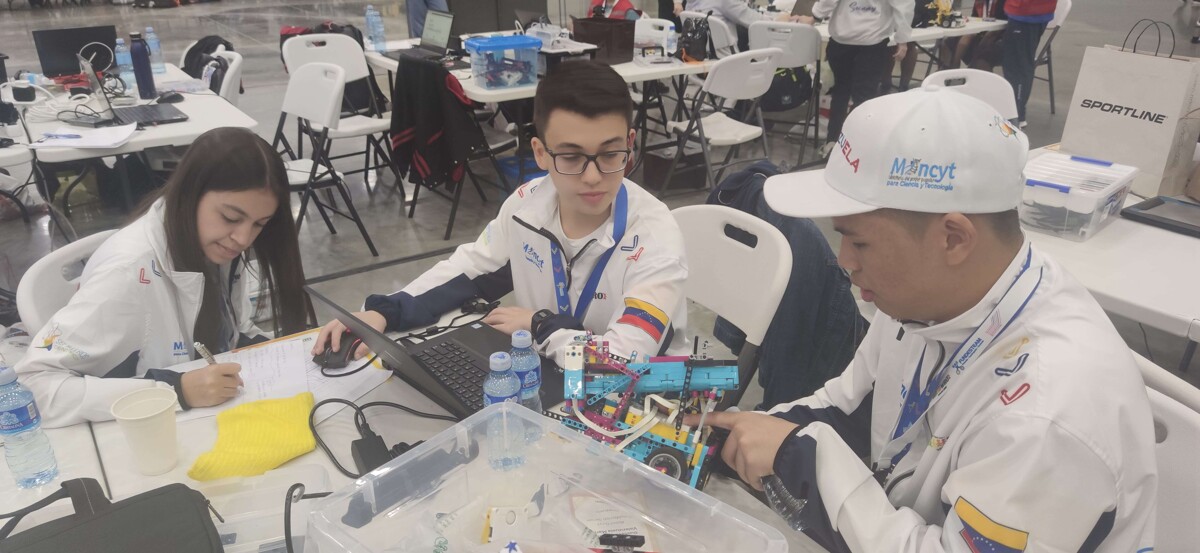
The freezing of subsidies and allocations to educational centers has reduced or eliminated their capacity to invest in new technologies, including artificial intelligence. In contrast, China has consistently promoted its intellectual model in education, research, and development through systems that have yielded accelerated results, thanks to government support provided for decades. The loss of talent has undermined the foundations of innovation and scientific progress, jeopardizing the country's future educational and professional prospects, plunging it into a regressive process that threatens its supposed global leadership. China has nearly six million STEM graduates, making it the country with the highest number in the world, prepared to succeed in the current technological war. For example, artificial intelligence is a mandatory subject starting from the third grade, placing students in an advantageous position to develop under an interdisciplinary model aligned with the demands of today's society. In these contrasting educational systems, a lethal system is contrasted with intellectual development. The lethal educational system, established by the Madman in Gringolandia, is characterized by the implementation of methodologies based on economic coercion and the threat of large-scale government intervention. This approach manifests mainly in the imposition of economic measures and other forms of pressure on traditional educational centers, generating a hostile environment for the academic and student community. Restrictive immigration policies have caused a brain drain, especially of Chinese tech workers who have chosen to return to their country to integrate into a growing sector. This training is complemented by government initiatives to raise awareness and general knowledge about artificial intelligence through national innovation platforms, science education programs, and the use of AI in museums and exhibitions, promoting public participation instead of exclusion. These policies have produced notable results in the fields of science, technology, and innovation. The academic curriculum is demanding in all aspects and places the student population in a privileged position, allowing them to train in a teaching-learning system supported by information and communication technologies. Educational systems integrate science, technology, engineering, and mathematics (STEM), which has resulted in highly qualified generations that position China at the forefront of the new industrial and intellectual revolution. The highly qualified student body is responsible for China accounting for 50% of artificial intelligence researchers and having obtained 70% of global patents in this field. If on a smaller scale, with the upcoming educational reform, we could emulate in Panama that “talent factory.” The author is a citizen. China possesses 9 of the 10 most advanced educational centers in science and technology, placing it in an unquestionable leadership position globally. This has affected companies in Silicon Valley, which traditionally relied on skilled labor for key positions and the drive for research and development. As a direct consequence of the application of this lethal system, a phenomenon of intellectual exodus is observed, with individuals being persecuted through racial and migratory profiles. The confrontation between educational centers and the government is so evident that it contributes to creating hostile environments, leading to disturbances that can result in the deaths of students and innocent people. The brain drain, motivated by restrictive policies and incoherent measures, has had devastating repercussions on the quality of research and development. The MAGA agenda of the Madman is pointed to as the main promoter of the decline in education and research in Gringolandia. Learning is fostered up to doctoral degrees (PhD), generating a large amount of talent for strategic areas that require these specialties. The integration of robotics with artificial intelligence, called “physical AI,” has made it possible to develop humanoid robots capable of performing increasingly complex functions at significantly lower costs than the competition. As can be seen in the facts presented, China's educational advantage over the rest of the world is outstanding. It not only leads the industrial robotics revolution but also has a “talent factory” that ensures the permanence of its leadership. This persecution affects both teachers and brilliant students, who constantly face harassment and discrimination. In innovation, digital models like TikTok, ByteDance, and DeepSeek have surpassed their competitors, with DeepSeek being an example by reaching one hundred million active users in just one week since its launch. In the field of robotics, China has over 50% of new installations worldwide and dominates the supply chain, allowing it to build more than two million robots a year, which increases the productivity of its factories.