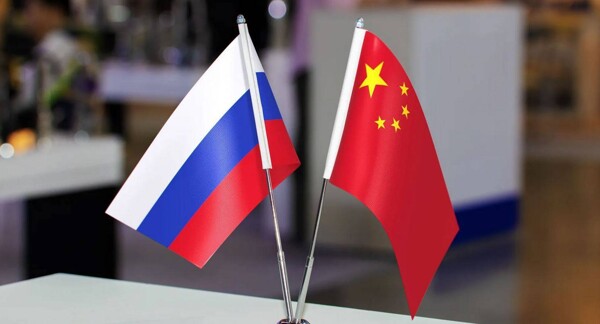
17 elements from the periodic table have become indispensable for the daily life of the world's population, just as much as, or even more than, oil, but the supply chain has a single owner, which explains part of the geopolitical conflicts currently taking place. It is difficult to imagine modern life without mobile phones, computers, cars, satellites, and other equally essential devices. Most of these objects have improved their technology based on the incorporation of minerals known as rare earth metals, whose extraction is concentrated in a single country: China. As Chomón writes, since 1985, China has systematically obtained 'almost total control of the world supply chain for rare earth metals.' The presence of this production chain in Chinese territory led many companies that use rare earth metals as raw material, including American ones, to set up in China for cost reasons. In response to the tariff war unleashed by Trump against China and the world, China devalues its currency, the yuan, to help the final decision be to stay in the Asian giant. 'All rare earths are metals,' stated Morales. She explained that the process of separating rare earths is called 'beneficiation.' 'It is not an alloy of rare earths, it is a mixture of rare earth oxides,' explains Morales. She clarifies what the Asian giant does: 'it buys the production from other countries as a mixture of rare earths and on its territory it separates them and sells them separately, as well as using them for its own industry.' The researcher explained that the extraction of rare earths 'is not that difficult.' 'The most complicated part is to separate them from each other, because they are mixed together within minerals,' she added. To separate scandium from other rare earths, 'you have to invest a fortune.' 'As alarmingly as astonishingly, the Asian giant controls 80% of the rare earth market. Scandium, which is the most expensive of all rare earths, is sold as an oxide, and last year it was selling for 3,800 dollars per kilogram. These figures reach almost a worrying 100% if we refer to heavy rare earths.' There are some industrial or medical applications that need them to be pure, and others that do not, there are others that can be like a mixture or with different degrees of purity,' she specified. Chomón's book states that since 1985, China has systematically obtained 'almost total control of the world supply chain for rare earth metals.' The first to come into contact with rare earths was a lieutenant in the Swedish Army in Ytterby, Sweden, in 1787. Between 1945 and 1947, the 17 elements that are currently known were discovered. The word 'earth' comes from how oxides were called in the past. 'Geochemical behavior is how they move in geological systems, in magma, in the water between rocks, in the depths of the crust,' she added. 'Extraction itself, that is, getting them out of the rocks, is not that complicated. Then you have different ways to beneficiate them, which is to separate the rare earth from the rock. Most of it is mined in open pits, although there is also underground mining. They are always going to be bonded to oxygen and many times they are also marketed directly as oxides, not in a completely metallic state, because when they are pure, they are metals.' 'That means it has 71 protons in its nucleus and at least 71 neutrons. That is what gives the weight. The heavier an element is, the more mass it has. The lightest ones are simpler. The heaviest elements are going to be in the rocks and the lightest ones are going to be as gases,' added Morales. 'This timid element that is produced when uranium decays was named promethium. Today it is used in pacemakers, watches, portable X-ray equipment and even in nuclear batteries,' recounts Chomón. But the uses of all 17 together range from being a fundamental part of chips to increasing the strength of magnets used in electric vehicle motors and wind turbines, passing through being incorporated into 'radar devices, plasma and LED screens, polishing agents, catalysts, controllers of reactions in nuclear power plants, sensors, readers, lasers, fiber optics, cameras, robots, satellites, contrast agents in medicine and, among many others, make alloys lighter, but stronger and more resistant'.

The Geopolitical Crusade for Strategic Metals
17 elements from the periodic table have become essential for modern life, but their extraction and processing are almost entirely controlled by China, causing sharp geopolitical conflicts and trade wars.