China maintains its support for Cuba in the face of US sanctions and the energy crisis the island is facing, although questions remain about the true extent of that support: how far is Beijing willing to get involved in this new Latin American front?
Chinese Foreign Ministry spokesperson Lin Jian stated this week at a press conference that his country «resolutely opposes any action or inhumane act that deprives the Cuban people of their right to survival and development» and assured that Beijing «firmly supports Cuba in safeguarding its national sovereignty and security».
The spokesperson added that China «will provide Cuba with the support and assistance within its capabilities,» at a time when the island is facing widespread blackouts that could leave more than 60% of the territory without electricity supply during peak demand hours, according to official forecasts.
These statements come after Foreign Minister Wang Yi expressed his opposition to «interference by foreign forces» in Beijing last week during a meeting with his Cuban counterpart, Bruno Rodríguez.
Rodríguez's visit to Beijing was part of a diplomatic tour in which the Cuban government sought support among its traditional allies, including Russia and Vietnam, due to the loss of its main regional oil supplier and US pressure.
On a material level, Beijing has announced this year the shipment of 90,000 tons of rice to the island, the largest donation of this product ever reported for Cuba, as well as a line of «emergency financial assistance» valued at 80 million dollars approved by Chinese President Xi Jinping.
A Delicate Balance
According to Joe Mazur, an analyst at the Trivium China consultancy, China's expressions of support reflect a delicate diplomatic balance.
Therefore, he considers it «not very likely that China will intervene to rescue Cuba on the energy front.» Mazur added that Latin America «is not among China's main geopolitical priorities» and that Chinese strategists are aware that Washington considers the region its sphere of influence, so it is foreseeable that China will act cautiously in Latin American politics.
Irritation in Beijing
In addition to not wanting to irritate Washington more than necessary, there is also another type of irritation: that of the Chinese government with its Cuban allies for having delayed for so long the implementation of the economic reforms and opening announced during Raúl Castro's presidency more than a decade ago.
This delay, according to Latin American diplomatic sources, is inexplicable to Beijing, which, seeing no signs of an economic course change in Cuba, has been reluctant to grant it large loans or carry out major investments such as those it has carried out in other Latin American countries.
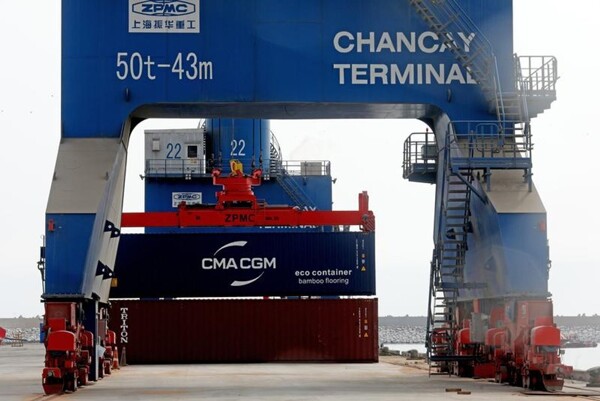
In fact, Chinese investment in Cuba is low compared to other Latin American countries with which China's political relations are by no means as close as those with Cuba, where, despite serious infrastructure shortcomings, there is no major Chinese project related to the New Silk Roads, the Asian giant's largest global initiative in this area.
In any case, the Chinese Executive has publicly urged Washington to «immediately end the blockade, sanctions, and any form of coercive measure against Cuba,» due to the disruption in crude oil supply following the capture of the former president of that South American country, Nicolás Maduro.
«China is interested in maintaining and protecting its relations with various Latin American countries, but it has to walk a very fine line in this case,» he told EFE.
In his opinion, the aid announced so far is «relatively modest» because Beijing «is reluctant to be seen as directly undermining US pressure on Cuba».
Furthermore, he stressed that at this time the Chinese government is focused on maintaining the stability of its ties with Washington ahead of the scheduled visit of US President Donald Trump in April and is trying to avoid additional tensions.