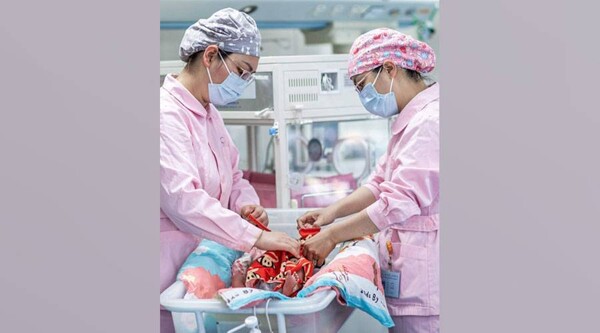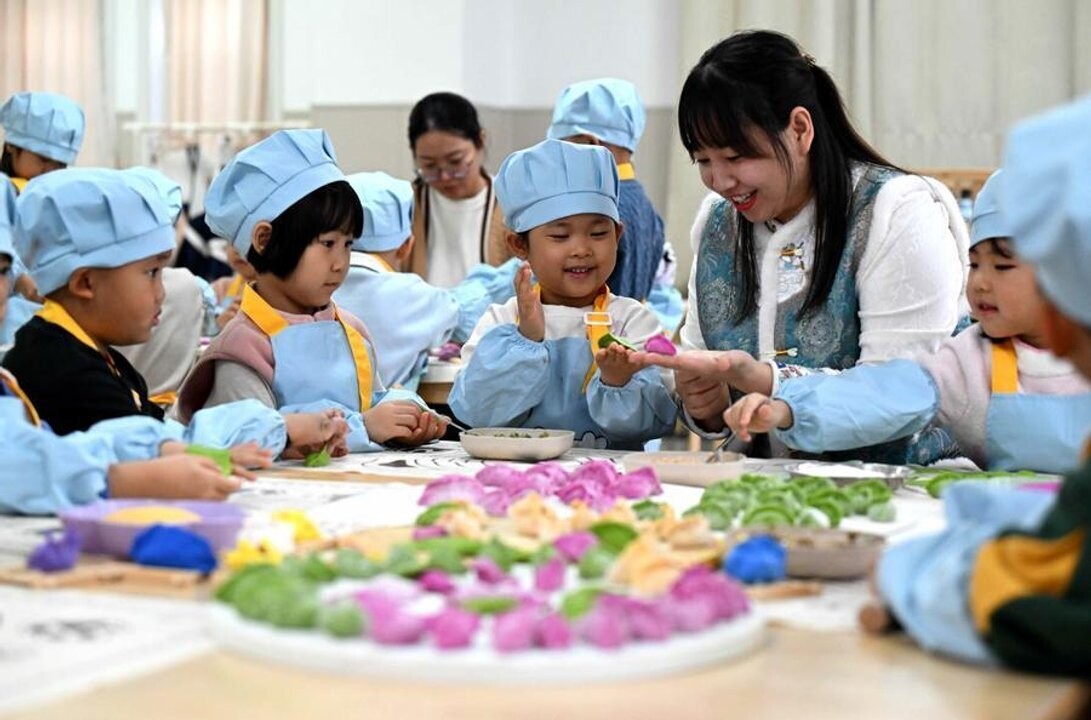
China has begun to consider a bill on childcare services, aimed at strengthening the legal protection of children under 3 years old and improving policies to support childbirth and parenting. This is the first law of its kind, designed to systematically regulate relevant services to foster a society that is favorable to childbirth and promote high-quality demographic development, according to the draft accessed by the Argentine News Agency. For example, it details norms related to promoting play activities for young children, prohibiting screen time, and guaranteeing food safety. It also requires the establishment of health management systems and the strengthening of disease prevention measures. In addition, it would obligate institutions to install surveillance cameras in key areas, such as activity spaces and food preparation areas, and to keep recordings for at least 90 days. "Aging Population" In recent years, a series of measures have been implemented as the government increasingly focuses on population aging and declining fertility, a challenge faced by many nations. This is how it has gradually begun to introduce free preschool education, exempting children in their final year of preschool from paying care and education fees starting from this fall semester. This is expected to save households about 20 billion yuan (approximately 2.84 billion dollars) just in this fall semester. The draft was presented this Monday for its first reading at the ongoing session of the Standing Committee of the National People's Congress (NPC), the country's top legislative body. The context in which the initiative arises is the change in family dynamics. It consists of eight chapters and 76 articles. It adopts a demand-based and problem-focused approach to address the main challenges in childcare services, including quality, provider qualifications, and the regulation and supervision of institutions. The goal is to expand affordable childcare options, reduce the cost of raising children, and establish a diverse, safe, high-quality, reasonably priced, and accessible public childcare system. "Dual-Income Households" Many dual-income households in China struggle to balance work and childcare, making daycare services for children under 3 increasingly essential. Recent official data shows there are 126,000 childcare institutions nationwide, offering 6.66 million places. With approximately 30 million children under 3, the gap in demand is more than significant. The bill is based on policy guidelines with legal protections. If it becomes law, before obtaining approval from the authorities, childcare institutions would have to meet several conditions, including those related to staff, facilities, and funding. They would also be required to establish a public information system in which key documents such as licenses, registration data, safety protocols, meal plans, rate policies, and staff qualifications and health certificates are disclosed. It proposes a national qualification examination and a registration system for childcare workers, establishing educational and professional standards. "Health Management" According to the National Health Commission, proper care and health management in early childhood are fundamental to early child development, which not only determines individual well-being but also the country's long-term social and economic prospects. The initiative for the bill began in 2023, explained Luo Shugang, chairman of the NPC's Education, Science, Culture and Health Committee, who presented the bill to the legislators. Subsequently, extensive field visits were made to regions such as Beijing, Guangdong (south), Heilongjiang (northeast), and Inner Mongolia (north) to gain a deeper understanding of local childcare services and practices, with the aim of addressing key issues through legislation. Lawmakers will deliberate on the bill during the ongoing session, which is held from Monday to Saturday.