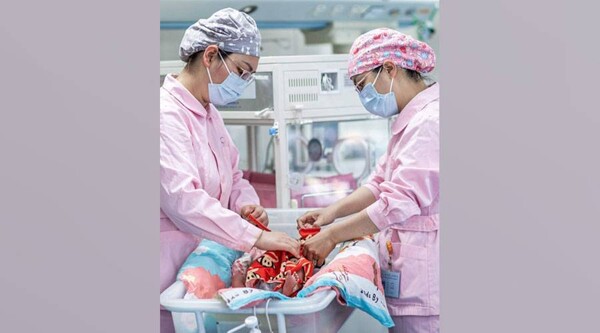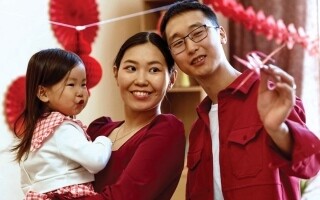
The Manchu people in China, throughout their long history, have been distinguished by a set of unique customs and traditions related to childbirth and child-rearing. Among the most prominent are 'Lucao' and 'Kaisheng,' which involve hanging a wooden bow outside the front door of the home upon the birth of a boy, or a piece of red cloth upon the birth of a girl. These practices reflect a blend of folk beliefs and rural heritage linked to a life of hunting and nomadism that has remained present in the cultural memory of this people to this day. The Manchu are historically known for founding the Qing dynasty, which ruled China from 1644 to 1912. Today, members of this ethnic group live in various regions across China. The 2021 Statistical Yearbook reported that the Manchu population exceeded 10 million, indicating their continued demographic and cultural presence. The Manchu refer to childbirth with the word 'Lucao,' which literally means 'falling on the straw.' This is a clear reference to their old rural lifestyle based on hunting and reliance on nature. In the past, pregnant women would place a futon on a traditional, heated brick bed, then spread straw directly on its surface for the birth to occur on, which gave this name its symbolic meaning. The birth of a child was considered a major family occasion that received special attention. It imposed a number of strict taboos and customs on the pregnant woman. For example, she was not allowed to sit in front of the stove, the windowsill, or the grinding stone. She was also prohibited from attending other people's weddings, and she would repeatedly receive advice to avoid eating rabbit meat, based on a common belief that this could lead to a child being born with a cleft lip. Upon the birth of a boy, the family would hang a wooden bow and two arrows, known as 'son's arrows,' near the door. This bow had no real military function but was a symbol with deep meaning. The bow was made of curved branches, and three arrows were wrapped in a red cloth, expressing the hope that the child would grow up to be a brave knight and a skilled archer, in line with the values of courage and skill associated with Manchu history. Over time, the meaning of the color red evolved; it became a traditional sign for the birthing room. It was common not to allow any person to enter this room during the delivery process, based on an ancient belief that strangers could cause the mother's milk to 'dry up,' which reflects a mix of popular fear and a concern for the safety of the newborn and the mother. Among other distinctive Manchu customs is the practice of 'Kaisheng,' or the selection of a 'birth godparent.' This term refers to the first stranger the newborn sees after leaving the birthing room. According to traditional beliefs, it is thought that this person's character can have a profound influence on the child's future and life. Therefore, families placed great importance on choosing a person known for their good character and kindness, hoping the child would acquire some of their positive traits. Parents would treat this person with great respect and clear generosity, and in many cases, they were seen as the child's godparent, tasked with supporting, caring for, and contributing to ensuring the child's healthy and sound upbringing. Despite modern social changes, some of these traditions remain present today in parts of northern China's Xinjiang region, as well as in other areas, serving as a testament to the depth of the Manchu people's cultural heritage and their commitment to preserving their identity across generations.