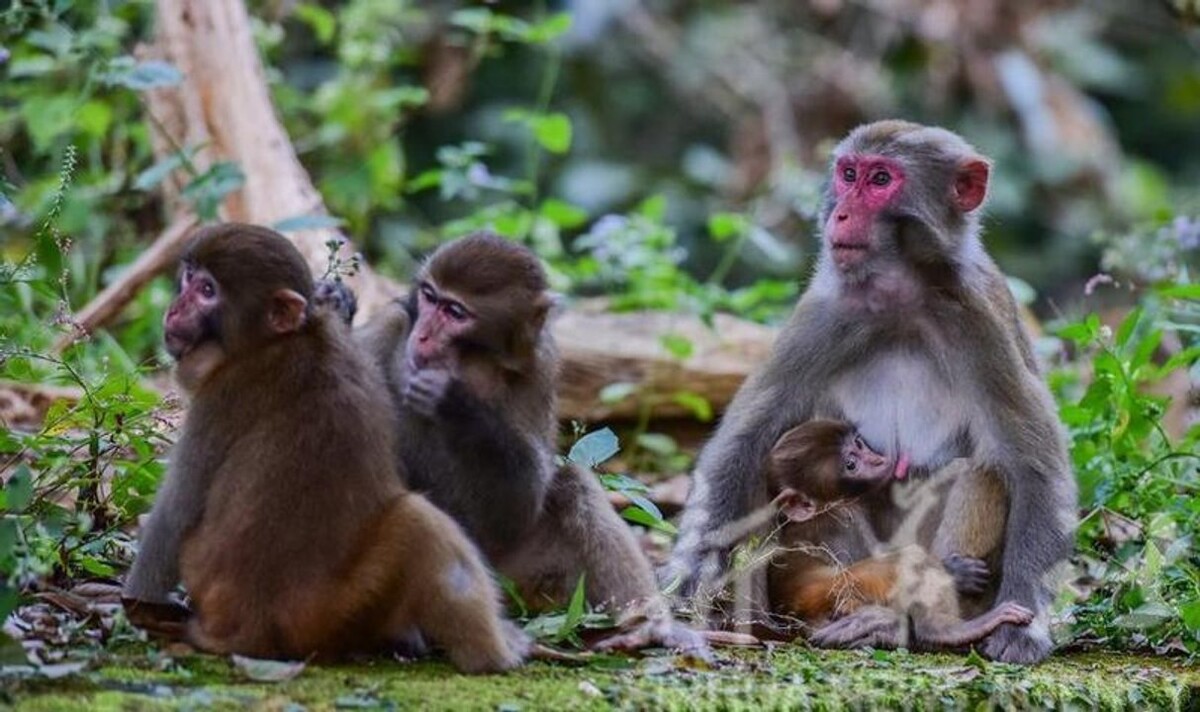
A research team led by the Kunming Institute of Zoology (KIZ) of the Chinese Academy of Sciences has recently mapped a comprehensive landscape of natural aging in rhesus monkeys, covering all major organ systems across multiple molecular dimensions. The team collaborated with other researchers to conduct a study based on 17 female rhesus monkeys aged 3 to 27, collecting samples from 30 major organs, including the skin, multiple segments of the digestive tract, and organs related to the cardiovascular and immune systems. They measured and analyzed omics data across three molecular dimensions: transcriptomics, proteomics, and metabolomics. Their findings revealed that the aging process in rhesus monkeys occurs at different rates in various organs. Twelve organs age relatively quickly, including the thymus, spleen, gastrointestinal tract, kidneys, and ovaries, while eleven organs age relatively slowly, including the brain, liver, skin, and adrenal glands. The study, published in the journal Nature Methods, also identified key molecular characteristics underlying these differences in organic aging. In rapidly aging organs, the efficiency of translation to convert mRNA into proteins decreases significantly with age, while it remains relatively stable in slowly aging organs. This suggests that a decrease in translation efficiency could serve as a crucial molecular basis for the various rates of organic aging, offering new potential targets for future anti-aging interventions. The three categories of omics data have been made available to the public as an important resource for aging research. Non-human primates, such as rhesus monkeys, are highly valuable research models due to their significant similarities to humans in terms of physiology, metabolism, and aging phenotypes. In a previous study, KIZ researcher Kong Qingpeng led a team to discover that the aging process in rhesus monkeys has significant non-linear characteristics, with a distinct inflection point of acceleration between 16 and 19 years of age, equivalent to 48 to 57 years in humans. This inflection point closely aligns with key changes observed during human aging, further supporting the macaque as an ideal model for the study of human aging.