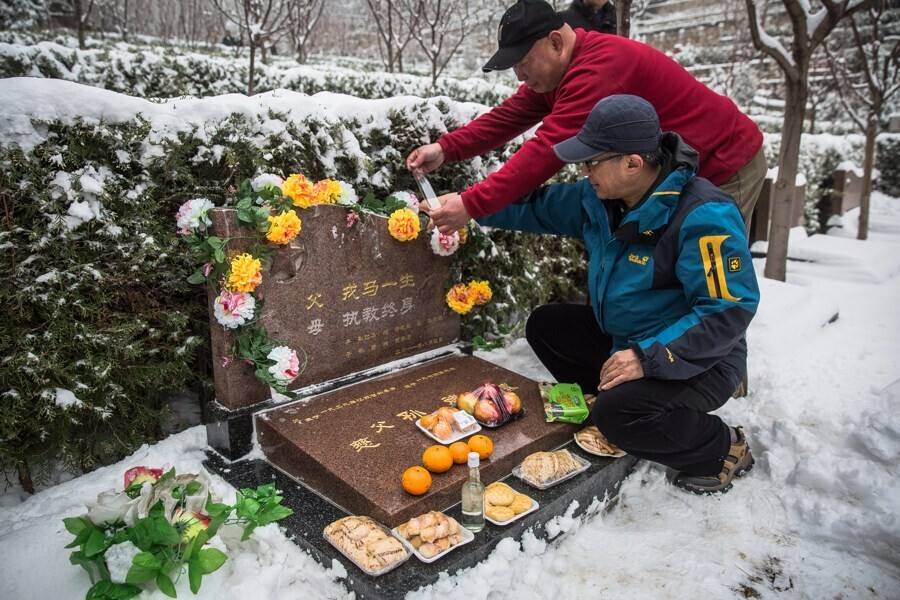
Coinciding with Qingming, the festival in which millions of Chinese honor their ancestors, the cost of funerals and burials has become a growing concern for many families in the country. The price of graves, which in large cities exceeds 100,000 yuan (about $14,550), and the lack of transparency in services have turned burial into a significant expense for numerous households. To contain this impact, authorities have intensified regulation, promoted alternatives, and tried to close the gaps through which informal practices have emerged. Dying, a growing expense. In China, the cost of a traditional burial has grown in line with the rising price of land and the scarcity of funeral spaces, especially in large cities. In cemeteries of cities like Shanghai or Shenzhen, prices reached up to 200,000 yuan ($29,000), while usage rights are typically limited to 20 years and involve maintenance fees. This combination of high prices and inconsistent conditions has fueled social discontent for years around a sector marked by a lack of transparency. Authorities themselves have recognized problems such as the lack of clarity in service descriptions, the absence of accessible online information, or the difficulty many families face in comparing costs at an especially sensitive time. Professor Xie Zhiyong of the China University of Political Science and Law told local media that the new measures aim to "reduce the financial nature of the funeral sector" so that "a dignified resting place ceases to be a luxury." The revision of the Funeral Management Regulations, approved last March, seeks to correct some of these distortions with measures such as limiting the size of graves to 0.5 square meters for individual burials and 1 square meter for double burials, and prohibiting considered excessive constructions. More than 11,000 companies linked to cemeteries operate in China, although the pace of new registrations has slowed, with 339 new companies in 2025 and only 42 so far in 2026, according to data from the consultancy Qichacha. Alternatives outside the system. The financial weight of traditional burials has favored the emergence of informal solutions such as so-called 'ash houses,' homes purchased not to live in, but to store funeral urns and hold commemorative rituals. The phenomenon, detected in several cities, is partly due to the cost difference between a grave and a home, as well as the longer usage rights of the latter, which can reach 70 years compared to the limited periods of cemeteries. In some cases, families opt for apartments in peripheral or lower-cost areas as an affordable and durable alternative. However, this practice has generated conflicts: neighbors have denounced the psychological impact, the possible devaluation of real estate, or the irregular use of spaces intended for daily life, after detecting visits with offerings or funeral rituals in these apartments. Legal experts warn that this use may violate principles of civil law, while authorities recognize difficulties in overseeing a phenomenon that is often not openly declared. The new funeral regulations expressly prohibit the use of homes to store ashes. State control and ecological shift. In the face of these imbalances, China has reinforced control over the funeral sector with the aim of containing costs and reinforcing its public service nature. New regulations require clear detailing of the price of each service, prohibit charges off official lists, and demand greater transparency, according to the State Administration for Market Regulation and the Ministry of Civil Affairs. The reform also restricts service provision to authorized entities and limits practices such as the outsourcing of morgues by hospitals. Furthermore, it establishes restrictions on land use and prohibits the construction of graves outside authorized cemeteries. In parallel, authorities are promoting a model shift with the encouragement of so-called ecological burials, which include scattering at sea, burial under trees or in grass, in many cases subsidized or free. In 2025, more than 50,000 sea burials were registered, a 170% increase from 2020, while at least 28 provinces have adopted supportive policies, according to official data. Despite these incentives, these burials still represent around 4% of the total, reflecting the persistence of traditional practices in a society where ancestor worship maintains a significant weight. Photo EFE. The entry 'Between expensive graves and new norms, China confronts the cost of dying and the weight of tradition' was first published in La Verdad Panamá.