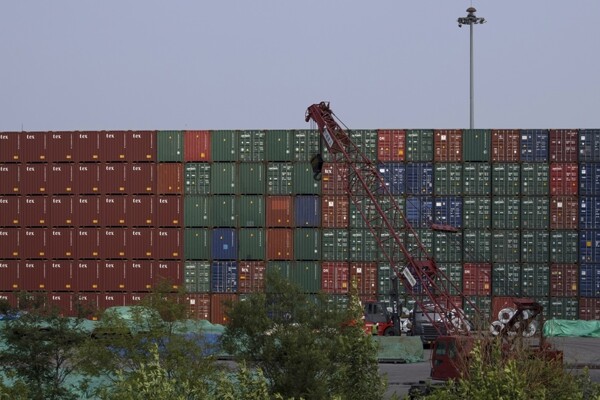
Activity in China's manufacturing industry rebounded in March after two months of decline, reaching its fastest pace in a year, according to official data published today by the National Bureau of Statistics (NBS) of the Asian country.
The Purchasing Managers' Index (PMI, a key indicator for the sector) stood at 50.4 points in March, 1.4 points above the 49 points marked in the previous month. In this indicator, a figure above the 50-point threshold signifies growth in sectoral activity compared to the previous month, while a figure below indicates contraction.
Analysts had anticipated a rebound into positive territory, but with slightly less momentum, to around 50.1 points. Among the five sub-indices that make up the manufacturing PMI, production and new orders—key for measuring demand—were the main drivers of growth. In contrast, sub-indices for raw material inventories, employment, and delivery times remained in the contraction zone, though all showed better readings than in February.
Huo Lihui, an NBS statistician, attributes the rebound to seasonal factors: the data are compared with February, when the Lunar New Year—the main festival of the year in China and a period of usual activity decline as workers return to their hometowns to see their families—was celebrated.
In any case, the government expert points to specific sectors such as the processing of agricultural goods and secondary foods, or the smelting and rolling of non-ferrous metals, as the main protagonists of the rebound. Other sectors, like textiles or plastic products, remained below the growth threshold.
Meanwhile, Zichun Huang, an analyst at the British consultancy Capital Economics, explains that the war in Iran is pushing prices up, but given an impact that will be felt in the coming months, "China seems less vulnerable than many other countries and should only feel a small blow unless the conflict escalates further."
The expert emphasizes that the new orders measure also hit a one-year high, thanks to orders from abroad reaching their highest level since April 2024: "Export growth remains solid despite China's restrictions on the sale of refined oil abroad and the impact of rising energy prices on global incomes."
Recovery in services
The NBS also published its non-manufacturing PMI today, which measures activity in the services and construction sectors. It rebounded from 49.5 points in February to 50.1 in March, also its first positive reading so far this year.
Analysts had expected an improvement in the indicator but insufficient to return to the expansion zone, forecasting it would stay at 49.9 points.
The rebound was driven by the recovery of the services sector, which again posted positive figures (50.2 points versus 49.7 in February) after four consecutive months of decline. The construction sector remained negative, as in the previous two months, though with a less pronounced decline, settling at 49.3 points after apparently hitting bottom (48.2) in February.
Part of that rebound in services consumption, adds Huang, is due to steps taken by Chinese regulators "to protect households from the impact of rising fuel prices."
The composite PMI, which combines the performance of manufacturing and non-manufacturing industries, rose from 49.5 points to 50.5 in March, reflecting a general upturn in economic activity.