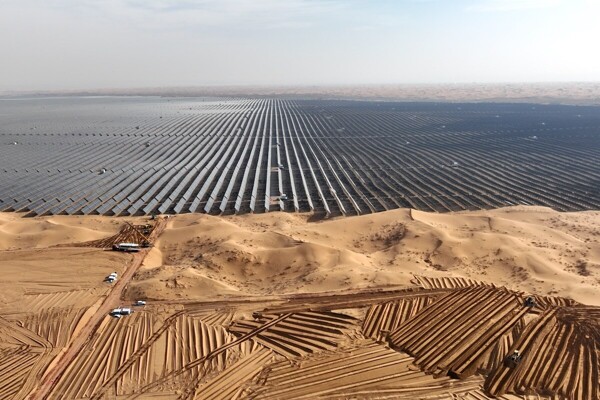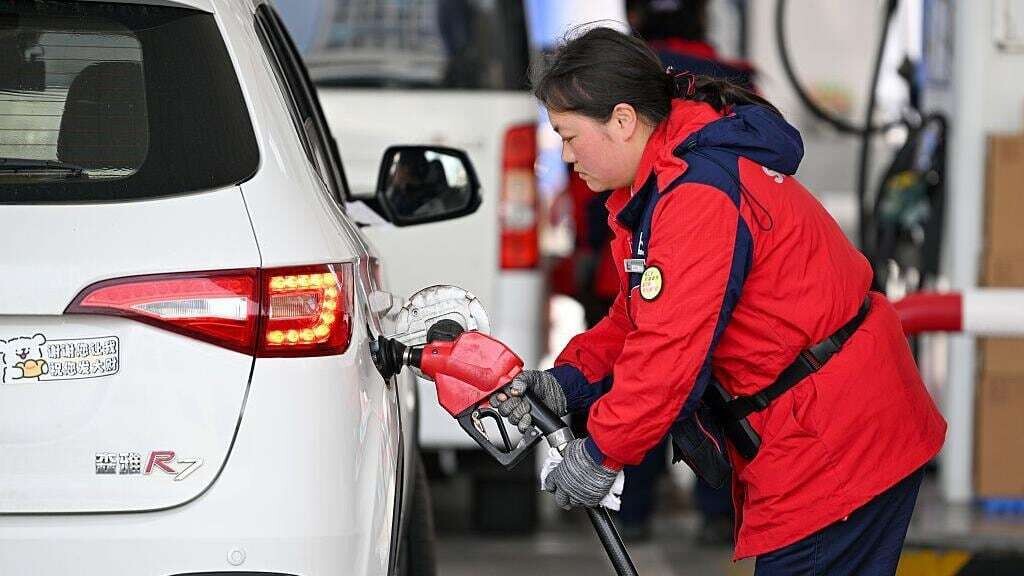
China's mobility costs are not linked to international oil markets.” This does not mean that the Chinese economy is immune to disruption in the oil supply. For electric vehicle drivers, charging prices can increase during an energy crisis if fuel prices rise. Last week, gasoline and diesel prices rose 695 yuan (about $100) and 670 yuan (about $97) per tonne, respectively, according to China Daily, citing an official report. In the case of Chinese factories, the rising cost of oil also increases the costs of the country's massive petrochemical industry, responsible for the production of plastics, fertilizers, and other chemicals. As the world's largest energy importer, China will now pay a higher price for every barrel due to the war, says Shi. Various reports point to Beijing buying more than 80% of Iran's oil exports. Ship-tracking data collected since the start of the war with Iran indicates that some of that oil is still reaching China, although analysts disagree on the exact size of China's oil reserves. According to the analytics firm Kpler, more than 46 million barrels of Iranian crude, which would cover several days' energy needs, are currently stored in tankers anchored in the South China Sea. Hansen states that estimates indicate China has accumulated reserves of about 900 million barrels, equivalent to a little less than three months of imports. China is the world's largest coal producer and accounts for more than half of global production. Oil and gas, for their part, represent a little more than a quarter of China's overall energy matrix, according to estimates published in state media, making the country less dependent on these resources than Europe or the United States. Prepared for tough times Beijing has been taking advantage of lower crude prices and abundant supply from Gulf states for years to build one of the world's largest oil reserves, explains Ole Hansen, head of commodity strategy at Saxo Bank. Between January and February of this year alone, China bought 16% more crude than in the same period last year, according to its customs administration. Iran, whose oil is sanctioned by the United States, has become a key supplier of cheap crude to China. This makes Moscow, by far, the largest oil supplier to Beijing, despite sanctions imposed by the United States and Europe. Coal remains the main source of electricity generation in China and is abundant in the country. Saudi Arabia and Iran each represent more than 10% of its imports, according to EIA data. Most of the crude that China imports comes from Iran and the Middle East through the South China Sea and is used as fuel to sustain factory activity and transport, especially in the southern half of the country. The north, in contrast, depends mainly on oil produced from the large fields within Chinese territory, as well as imports via pipeline from Russia, which have not been affected by the war in the Middle East. While many Asian countries have relied heavily on oil from Gulf countries, Russian crude accounts for nearly a fifth of China's energy imports. Figures from Columbia University cited by Chinese state media raise the country's oil reserves to about 1.4 billion barrels. It is also unclear how much imported energy China consumes immediately each day and how much it diverts to its strategic reserves, notes Hansen. And much of that supply comes from abroad. Gulf countries are a key source of the crude that reaches China. Despite this, the total volume constitutes “a substantial cushion” in times of disruption. Despite having significant reserves, Beijing has shown signs of caution in managing its supply in the short term. According to press reports, authorities have reportedly ordered Chinese refineries to suspend fuel exports for the time being, in an attempt to contain domestic prices. The Chinese government did not respond to inquiries from BBC on this matter. China's search for self-sufficiency China has become a world leader in green energy production, with a rapid deployment of wind and solar parks across the country. According to the National Bureau of Statistics, wind, nuclear, solar, and hydroelectric power generated more than a third of the country's electricity in 2025. Since then, China has significantly expanded its renewable energy network, and estimates indicate that more than half of its installed capacity now comes from clean sources. As a result of this renewable push, crude oil represented only about a fifth of the country's total energy consumption in 2024. And oil demand is unlikely to increase again, according to the International Energy Agency (IEA). Energy economics researcher Roger Fouquet points out that China's “ambitious” transition to renewable energy is driven not only by environmental motives but has also helped protect its economy from global risks such as those seen with the conflict in Iran. “To some extent, China was fortunate to begin its investments in renewable energy 25 years ago, and is now reaping the benefits,” he says. Electric vehicles (EVs), which make up at least a third of new cars sold in the country, have also reduced the dependence on oil, notes Roc Shi from the University of Technology Sydney. “It means an EV owner in Beijing simply doesn't feel the impact at the pump when tensions rise in the Middle East,” he explains. China has long been preparing for a possible shock in oil supplies from the Gulf, but the disruption of the strategic maritime route passing through the Strait of Hormuz caused by the war with Iran is testing that resilience. Crude and gas shipments from the Middle East have halted after Iran threatened to respond to U.S. and Israeli attacks with its own attacks on ships passing through the strait. The blockade has caused a global oil shortage that has hit hard on Gulf-route-dependent Asian countries: the Philippines has imposed four-day work weeks to save fuel, while Indonesia seeks ways to avoid depleting reserves that would last only a few weeks. China, the world's largest oil importer, is also feeling the pressure. But the country is in a stronger position than its neighbors, after years of diplomacy and strategic planning aimed at preparing for a global energy crisis. An exam for China's energy network The global economy has entered a phase of turbulence since the United States and Israel launched attacks against Iran at the end of February. Since then, oil prices have at times reached nearly $120 a barrel, driven by attacks on ships and energy infrastructure, as well as the effective closure of the Strait of Hormuz, the world's busiest maritime route for crude oil transport. About one-fifth of the world's oil, some 20 million barrels daily, passes through that strait, according to estimates from the U.S. Energy Information Administration (EIA). The shortage has forced countries to seek alternative suppliers outside the Persian Gulf, while others have begun to tap their own strategic reserves. China, the world's second-largest oil consumer after the United States, uses between 15 and 16 million barrels daily, according to several market analysts consulted by BBC. Most is destined for its vast transport system: cars, trucks, and planes. But it will have no choice but to absorb that additional cost.