China's Five-Year Plans: An Economic Roadmap in Six Key Points
Although they set priorities and goals, five-year plans do not function as a detailed execution manual, and their application depends largely on how local administrations and bureaucracies interpret and develop these guidelines.
According to analyst Li Qi from Asia Society, the plan is better understood as a tool for 'communication, coordination, and political signaling within the system,' rather than 'a plan that exactly indicates what Beijing will do or how it will do it.'
These plans serve to coordinate economic policy at all levels of Chinese administration, from the central government down to provincial and local authorities. According to analysts, these documents guide decisions on public spending and investment worth trillions of dollars during each five-year cycle, which is why foreign governments, companies, and international markets follow their content closely to anticipate Beijing's economic priorities.
Five-year plans are the strategic documents through which China sets its main economic, social, and technological objectives for five-year periods. Although they no longer function as rigid plans of a classic centralized economy, they do mark investment priorities, key sectors, and goals that guide the actions of the central government and local authorities.
China adopted this model in 1953 when it launched its first five-year plan, inspired by the centralized planning of the Soviet Union, at a time when numerous Soviet experts came to the country to advise on the construction of factories, infrastructure, and economic bodies.
This system emerged in the context of close cooperation between Beijing and Moscow after the founding of the People's Republic of China in 1949 and after decades of war and internal turmoil in the Asian giant.
The priorities of the plans have evolved with economic development: the first, in the 1950s and 1960s, focused on heavy industry and agricultural collectivization in an economy that was still predominantly rural.
This change became more visible in plans such as the eleventh (2006-2010), which introduced goals to reduce energy intensity and promote a more balanced growth after decades of rapid industrial expansion.
In the most recent plans, areas such as technological innovation, industrial self-sufficiency, economic security, and the ecological transition have gained greater weight.
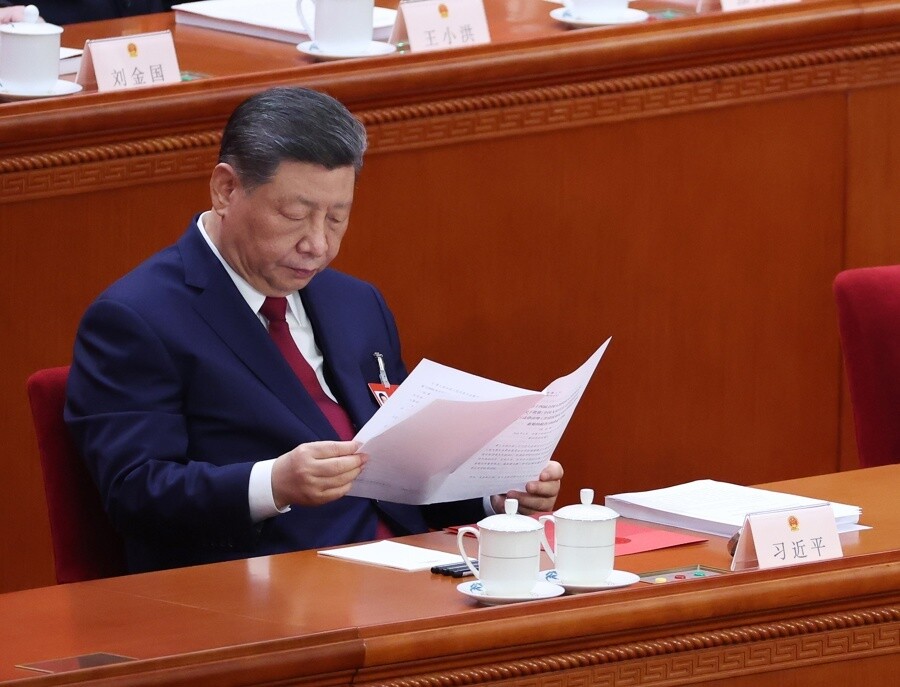
The National People's Congress (China's legislative body) is scheduled to approve this Thursday the 15th five-year plan (2026-2030), the document that will guide the country's economic and social policy for the next five years and which is part of a planning system that Beijing has used for over 70 years.