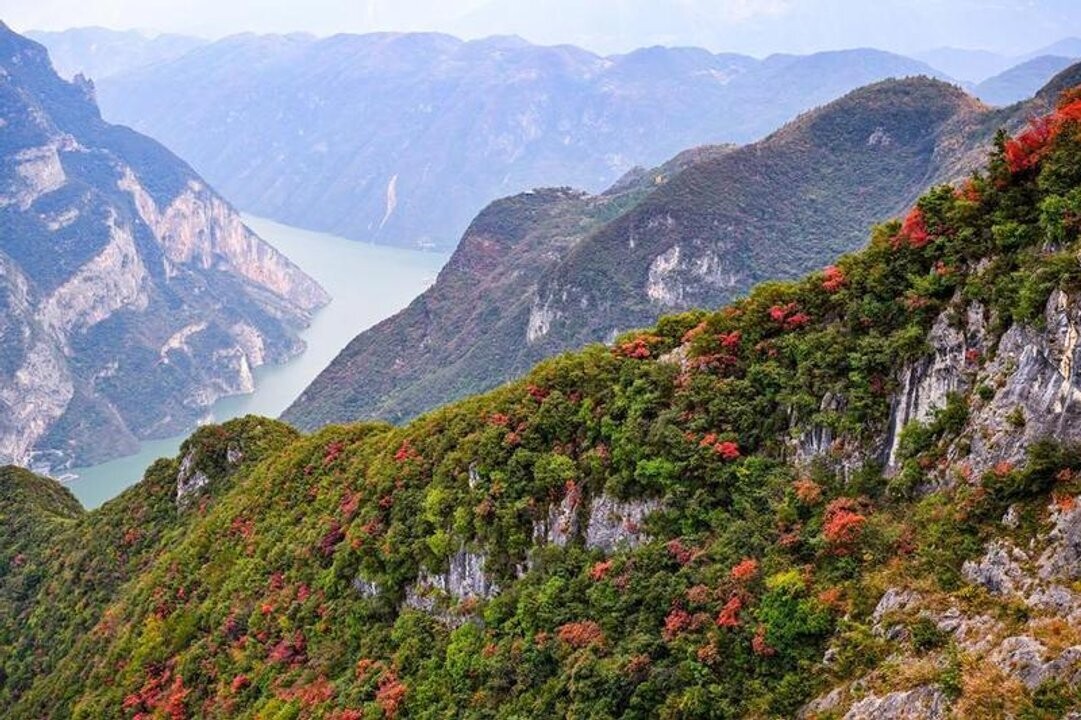
The millennial Chinese tradition of observing red leaves has transcended the purely seasonal to become a powerful economic catalyst, especially in the country's rural mountainous regions. This passion for the autumnal landscape is redefining tourism and the local economy. A prime example is Wushan County in Chongqing, in southwest China, where the 19th Red Leaf Festival is in full swing.
"Autumn and winter used to be the off-season for tourism... but the red leaves have transformed the off-season into the high season," stated Hou Yufeng, an expert from the Chongqing Municipal Commission of Culture and Tourism.
The phenomenon is replicated nationwide. In Beijing, Xiangshan Park attracted over 850,000 visitors, and in Liaoning province, the city of Benxi recorded year-on-year increases of 13.85% in tourists and 14.64% in total revenue during the autumn national holidays.
Experts agree that current success requires going beyond simple visual appreciation. Li Xinjian, Executive Dean of Beijing University of International Studies, emphasizes the need to "intensify efforts to enrich the tourist experience".
In Wushan, visitors can admire the landscape from multiple angles: by boat, car, hiking, and even with new experiences like hot air balloon rides and low-altitude flights. "The development of the red leaf economy can transform ecological advantages into economic ones, making it an effective approach to boost rural revitalization".
Spanish tourist Javier Fernández highlighted the possibility of seeing the red leaves "from so many angles".
In Qixia Mountain (Jiangsu province), the experience has been complemented by the rich cultural heritage, including theatrical performances, folk concerts, and rentals of traditional Chinese attire (Hanfu), as well as themed markets with local crafts and delicacies.
The most profound impact of this "red leaf economy" is felt at the grassroots level in rural areas.