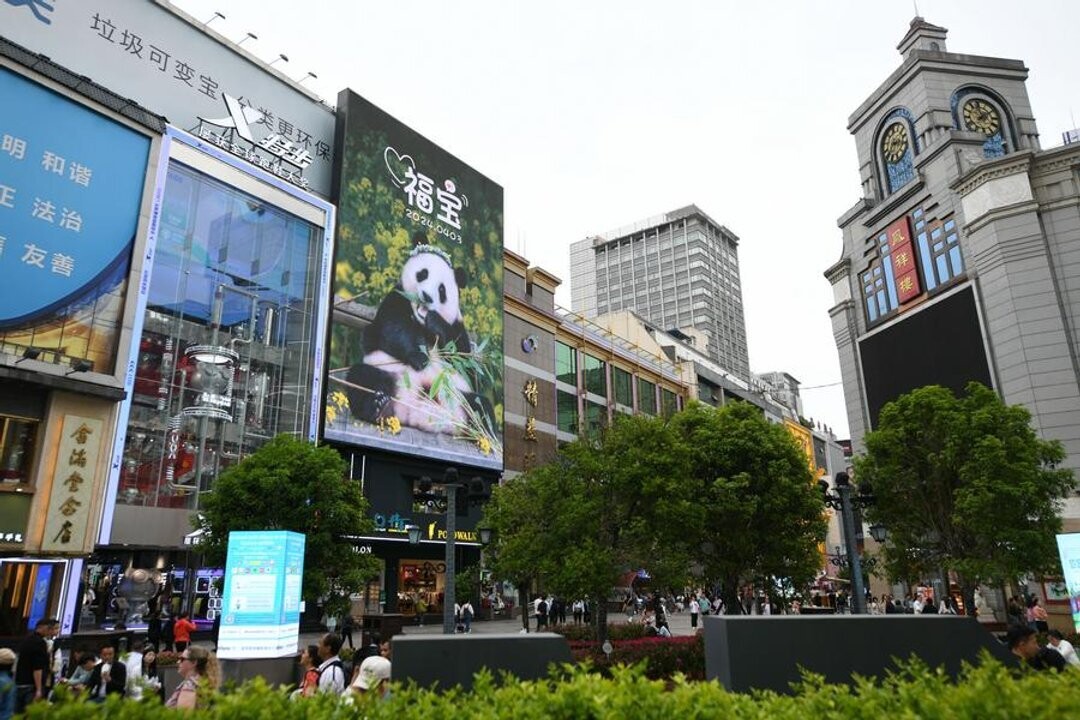
China is giving greater importance to urban renewal, systematically promoting the quality of housing, residential communities, neighborhoods, and urban districts, while coordinating a series of projects related to well-being, security, and population development, in order to create high-quality habitable spaces, said Zhang. "Additionally, we will firmly promote the development of the special urban renewal plan within the framework of the 15th Five-Year Plan, maximizing its strategic guiding role and designing a high-quality master plan for urban development," stated Zhang. Within its scope, the Department of Energy Efficiency and Science and Technology of the Ministry of Housing and Urban-Rural Development is responsible for formulating the 15th Five-Year Plan for the housing and urban-rural development sector at a high level. Shanghai's successful practices in urban renewal provide valuable insights and experience for cities across China. Based on thorough preliminary research, Shanghai has adopted a specific urban renewal strategy for each household, under which each family receives a personalized renewal plan, explained Pan Wei, an official from the Ministry of Housing and Urban-Rural Development. Each renewal plan is created based on face-to-face exchanges with local residents, whose concerns are specially collected and studied, said Pan. The city also explored a wide range of approaches to fundraising, and in addition to central government subsidies, the municipal government increased financial support for areas where renewal tasks are difficult, he added. In the context of its urban renewal campaign, Shanghai has completed the renovation of housing covering 380,000 square meters in the city center since 2023. This eastern Chinese metropolis has also launched 56 renewal projects in slum areas, benefiting 22,000 households, according to official data. "Subsequently, we will promote high-efficiency urban governance," he added, and concluded: "With the goal of modernizing urban governance systems and capabilities, we will continuously increase investment in governance, strengthen overall coordination in urban management, and refocus governance and support resources to the local level." In this regard, China's Minister of Housing and Urban-Rural Development, Ni Hong, called on Friday to intensify efforts in planning, financing, operations, and governance to promote localized and innovative urban renewal. During a national conference on urban renewal held in Wuhu, Anhui province, Ni emphasized the importance of developing urban renewal plans tailored to specific conditions and establishing a sustainable financing system for urban construction and operations. The minister highlighted the importance of creating sustainable operational models and improving governance at both systemic and community levels. He also stressed the need to accelerate the establishment of political and institutional systems that align with high-quality urban development. This year, Chinese authorities have focused on completing the renovations of old residential communities in urban areas built before 2000 and replacing old underground gas pipelines and corridors. They are also working on eliminating stagnant water bodies in cities at the district level. They are also promoting the classification of solid urban waste and building small urban parks and green corridors, according to a survey accessed by Noticias Argentinas. This continues the promotion of high-quality urban improvement during the 15th Five-Year Plan (2026-2030), according to Zhang Yan, deputy director of the Department of Energy Efficiency and Science and Technology of the Ministry of Housing and Urban-Rural Development. During the China Economic Roundtable, an interview program for all media presented by Xinhua News Agency, it was highlighted that the priority is to carry out high-quality urban renewal.