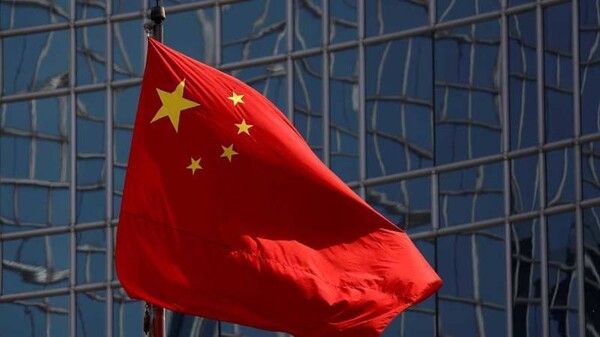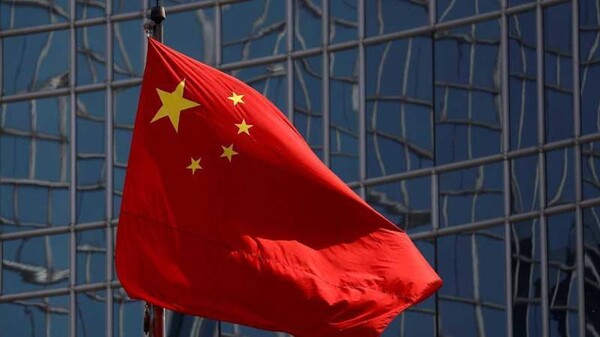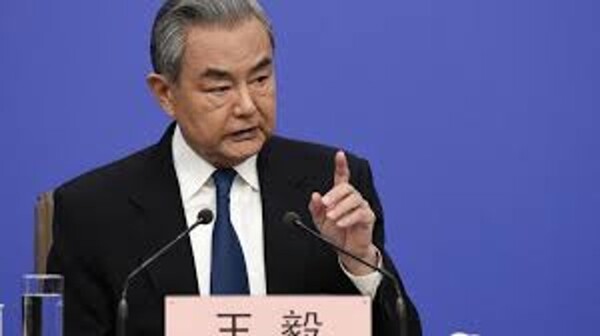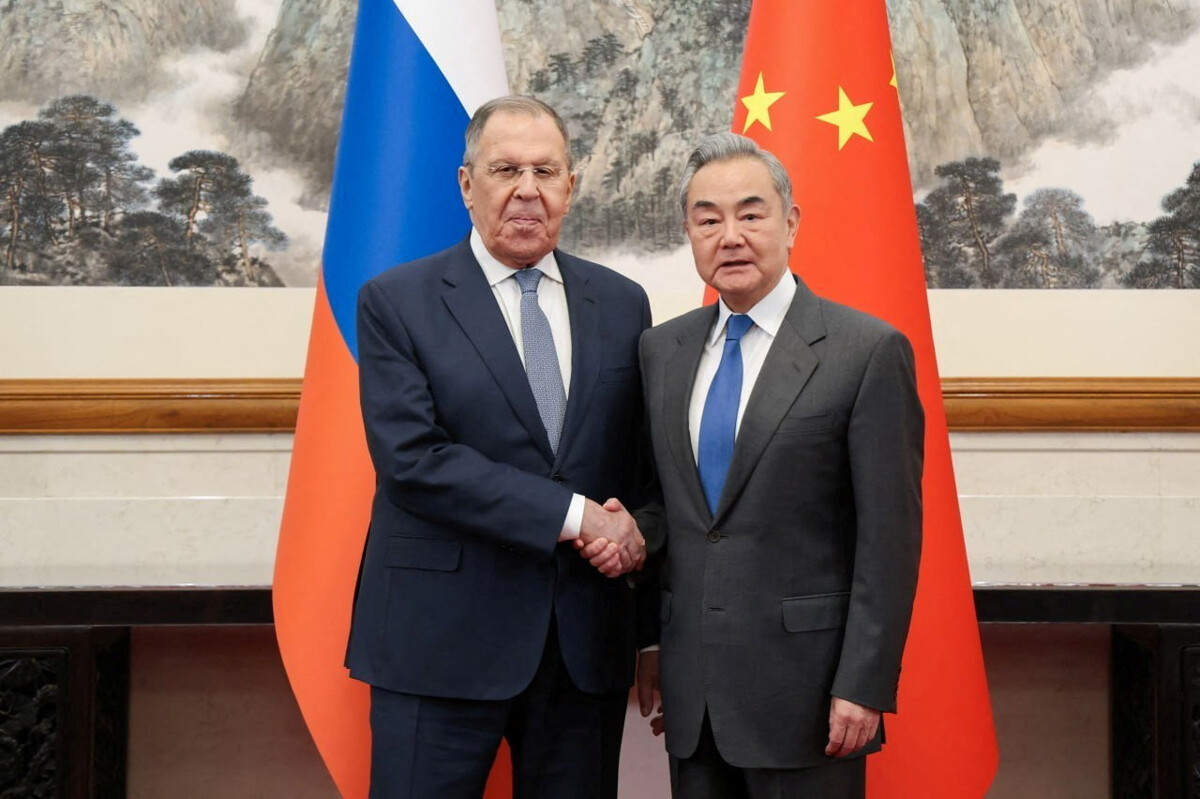
Beijing. On Tuesday, Russian Foreign Minister Sergei Lavrov criticized what he described as "highly dangerous games" being played by the United States and its allied countries in Asia, accusing them of fueling tensions in the region and seeking to "contain" the influence of Beijing and Moscow. The strong diplomatic and economic partnership between Beijing and Moscow, which has solidified since Russia's war against Ukraine in 2022, is built on their shared opposition to the United States. Russian Foreign Minister Sergei Lavrov arrived in China on Tuesday for a two-day visit during which the countries will "coordinate" their positions on current international issues, with the situation in the Middle East expected to be among them. Russia's TASS news agency quoted Lavrov as saying during his talks in Beijing with his Chinese counterpart Wang Yi: "As for the eastern part of the Eurasian continent, extremely dangerous games are also being played there." He added: "Whether it's the Taiwan issue, the South China Sea, or even the Korean Peninsula, tensions are being fanned in an area that for years has been a zone of cooperation and good neighborliness." China considers Taiwan an integral part of its territory and strongly opposes multiple U.S. arms sales to the island, viewing them as a violation of its sovereignty. In the autumn, relations between Beijing and Tokyo, a close U.S. ally, also deteriorated after Japanese Prime Minister Sanae Takaichi hinted that her country might intervene militarily if Taiwan were attacked by China. In the South China Sea, there is a sharp dispute over several small islands between China and the Philippines, which maintain close military ties with the United States. Lavrov said: "They are trying to dismantle (this space for cooperation in Asia) by creating small, bloc-based structures aimed at containing" China and Russia, without explicitly specifying who he meant. In recent years, the United States has bolstered its regional alliances, sometimes of a military nature, such as AUKUS (with Australia and the United Kingdom) and QUAD (with India, Japan, and Australia), with one of its primary goals being to counter Chinese influence. Lavrov also stated that he would discuss with Wang Yi future contacts between Russian President Vladimir Putin and his Chinese counterpart Xi Jinping. Lavrov's visit comes amid intense diplomatic activity focused on the crisis in the Middle East; China and Russia are allies of Iran and adversaries of the United States.