BEIJING, Nov 21 (NA/Xinhua) -- China has significantly strengthened its control over floods, water supply, food security, and ecological safety, establishing a more solid foundation for high-quality social and economic development. This is according to a report published by the National High-Level Expert Group, affiliated with Xinhua News Agency, and the China Institute of Water Resources and Hydropower Research, under the Ministry of Water Resources.
Since 2012, on the occasion of the 18th National Congress of the Communist Party of China, China's GDP has nearly doubled, while the total water consumption has remained stable below 610 billion cubic meters.
The progress made in river conservation and management in recent years has been historic, according to a report by a group of experts published this Friday, titled "Harnessing Rivers for National Prosperity and Public Welfare — A Study on the River Strategy of the New Era".
A scarce resource
The results are fundamental for China, as with only 6% of the world's freshwater resources, China supports nearly 20% of the global population and generates more than 18% of the planet's economic output.
The proportion of economic losses related to floods in relation to GDP fell from 0.49 percent during the 2005-2014 period to 0.23 percent in the 2015-2024 period.
Water use per 10,000 yuan (approximately $1,411) of GDP and per 10,000 yuan of added value of industrial production decreased by 52 percent and 63 percent, respectively, the report highlights.
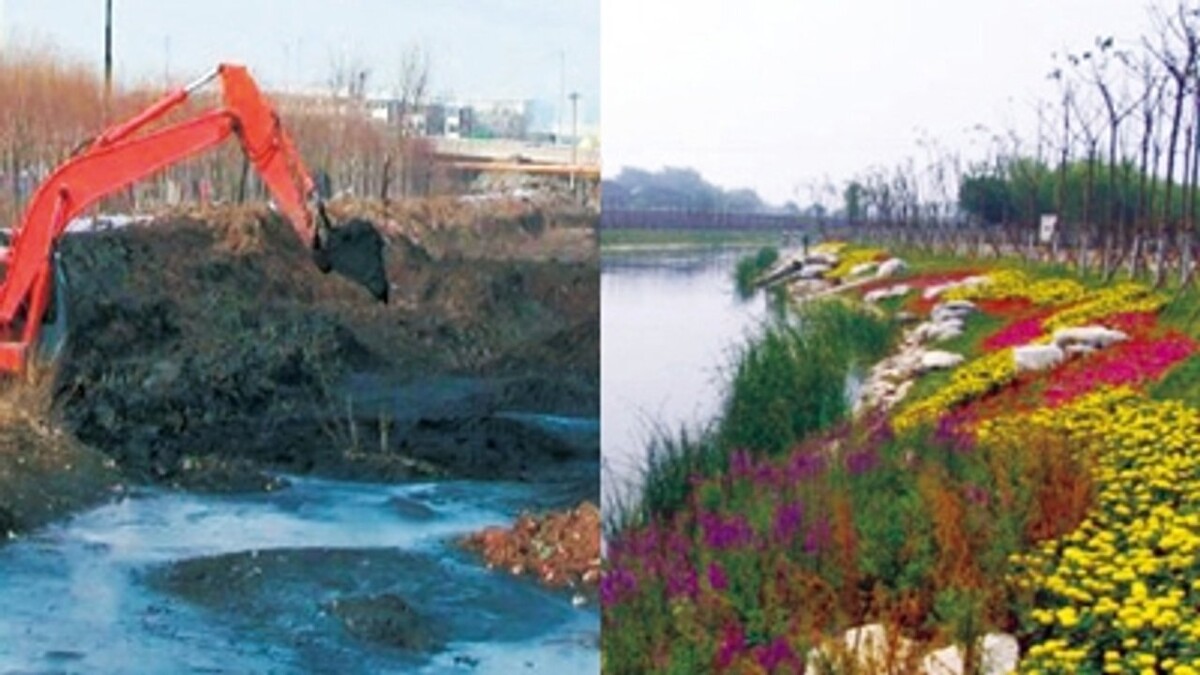
China also experienced a fundamental improvement in the conditions of rivers and lakes. For example, the levels of deep groundwater in the Beijing-Tianjin-Hebei region increased by 8.46 meters by the end of September 2025 compared to 2018, according to the report.