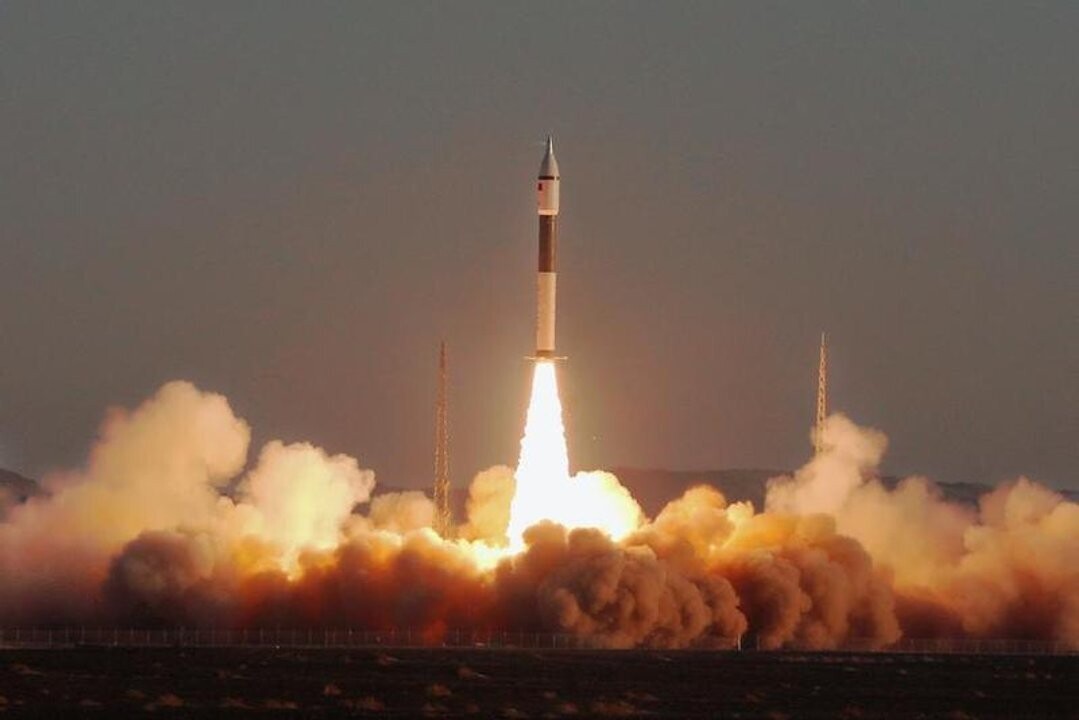
China launched the Kuaizhou-11 Y8 carrier rocket into space on Saturday, carrying an experimental spacecraft and a satellite. The mission is aimed at conducting scientific research and testing new technologies in orbit. The launch took place at 9:08 Beijing Time from the Jiuquan Satellite Launch Center in the country's northwest, and the payload was successfully placed into the intended orbit.
The experimental spacecraft DEAR-5, developed by the Beijing-based company AZSPACE, functions as a space platform. It has a payload capacity of up to 300 kilograms and can operate in orbit for at least one year. The spacecraft consists of a cargo module and a service module, offers 1.8 cubic meters of usable space, and is capable of transmitting experimental data to Earth. On this mission, it is carrying 34 experiments from universities, research institutes, and companies, covering areas such as microgravity, space technology, materials science, and verification of new technologies. The spacecraft is cylindrical with a pointed upper section, equipped with thin-film solar panels and multiple instruments for in-orbit experiments, including an optical camera, space environmental sensors, a plant cultivation area, a small laboratory, and a sealed flexible compartment.
The payload also includes the Xiwang-5 Phase 2 satellite, developed by the China Academy of Space Technology.