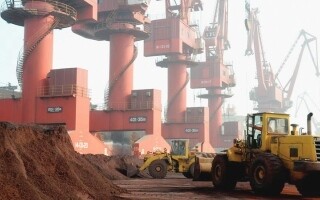
China's advantage in rare earth metals is not based solely on its resource wealth, but on its ability to integrate extraction, processing, and manufacturing on a large scale. These measures are aimed at consolidating China's advantage not only in production volume but also in industrial capability, technological superiority, and systematic coordination. Current political discussions have largely focused on the dimensions of China's strength in rare earth metals, but economic interdependence can be used as both a 'stick' and a 'carrot'. The rapid development of China's rare earth sector can be largely attributed to the national strategic priority and state-led industrial policy, which aligned technological modernization, capital investment, and regulatory arrangements across the supply chain. Beijing has long emphasized the importance of technological development and the need to move beyond the raw material extraction phase towards higher-value sectors. This technological modernization in the rare earth sector has been bolstered by China's capital allocation model, which provides generous support to the industry. Long before rare earth metals became the axis of competition among great powers, China was already engaged in mining and strategic mineral projects abroad through its overseas presence strategy and the Belt and Road Initiative. As U.S.-led efforts towards decoupling accelerate, influence over rare earth elements can also be used as a leverage tool. As China tightens restrictions on rare earth exports, the U.S. and its allies are intensifying efforts to diversify supply chains and reduce dependence on Chinese markets. However, amidst this intense focus on constraints, little attention has been paid to how China is responding to U.S.-led efforts. Beyond cutting off supplies, China is pursuing a multi-level approach that combines strengthening industrial policy, incentive-based cooperation, and careful balance in setting export controls. While China's strength in rare earths is undoubtedly prominent, focusing on it alone carries the risk of underestimating China's ability to adapt to strengthen its industrial base and manage the diversification pressures led by the U.S. Rare earth metals are not inherently rare; many countries hold large reserves of them. Although this development model encouraged increased supply and led to lower prices, it also helped create barriers for foreign companies, limiting their ability to compete in global markets. Furthermore, the regulatory conditions in the early stages of China's economic development facilitated rapid expansion, allowing China to achieve economies of scale in production that others struggled to reach. As the strategic value of rare earth metals has grown, recent political efforts have focused on promoting China's shift from a quantity-focused rare earth producer to a quality-focused one. This transition has included increased government funding, stricter regulatory standards, encouraging mergers among major producers, and greater focus on improving the midstream and downstream stages related to electric vehicles, renewable energy, and advanced manufacturing. Beijing has increased its exploration of ways to leverage its processing capabilities and technical expertise to strengthen economic ties with other countries. The new facility is expected to process the essential materials for electric vehicle motors, wind turbines, defense technologies, and advanced electronics. From 'The Diplomat' • China has shifted from a quantity-focused rare earth producer to a quality-focused one. Rare earth supply chains have become a major source of concern in global politics. An example of this is the talks between China and Malaysia in October 2025 regarding a potential refinery partnership, which may involve technical and technological assistance from China.