


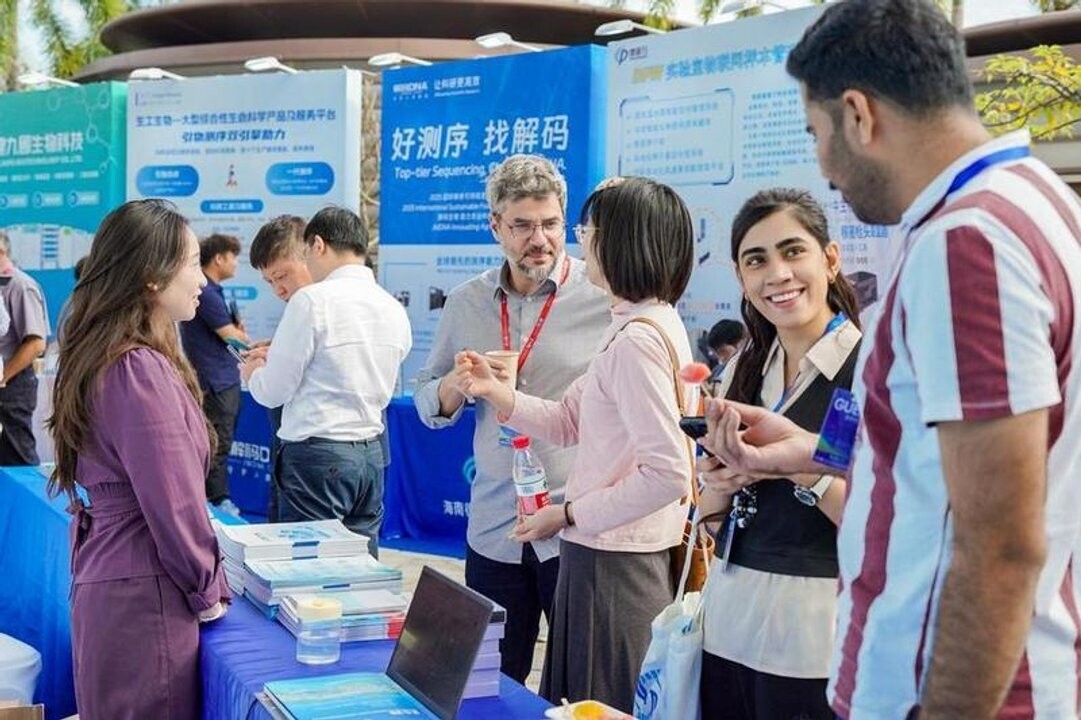
China and Latin American countries advanced in strengthening scientific and technological cooperation in the seed industry, with the aim of consolidating food security and promoting sustainable agricultural innovation, during the II Forum on Sustainable Food Innovation China–Latin America, held in the Chinese city of Sanya, in the province of Hainan. The meeting brought together agricultural specialists from China and various Latin American countries, who debated germplasm resources, new genetic improvement technologies, adaptation to climate change, and industrial applications linked to seed production. "We have already started joint research with the active participation of institutions and companies, and the next step is to perfect cooperation mechanisms to advance in comprehensive projects," explained Tian. Since the creation of the China–Latin America Sustainable Food Innovation Center in 2024, 11 memoranda of understanding have been signed and alternate centers have been established in Brazil, Argentina, and Uruguay. The International Center for Tropical Agriculture (CIAT), based in Colombia, has collaborated for more than 40 years with the Chinese Academy of Tropical Agricultural Sciences (CATAS), with more than 30 joint projects, the introduction of more than 2,000 germplasm resources into China, and the training of dozens of specialists. In Uruguay, the National Agricultural Research Institute (INIA) and Chinese partners developed joint laboratories for the genetic improvement of soybeans, with results that have already begun to be applied at the production level. One of the milestones was the creation of the China–Uruguay Joint Laboratory for Soybean Research and Innovation, which identified lines with high oil and protein content, some of which have already been approved for planting. According to the organizers, the establishment of new cooperation platforms will allow responding to the specific needs of each country. Meanwhile, Uruguayan researcher Santiago Signorelli stressed that cooperation with China will make it possible to take advantage of advanced technologies such as transcriptomics and proteomics to improve scientific efficiency. Cooperation on seeds between China and Latin America has a history of decades. While Brazil demands advances in genetic editing, Ecuador seeks solutions against banana diseases, areas in which China provides key technical capabilities. The plan foresees the installation of more than ten satellite headquarters in the region, with the aim of consolidating a large-scale cooperation network. Latin American specialists highlighted the impact of this articulation. "The seed is the starting point of agricultural production; without good seeds there are no high yields," stated Solange María Bonaldo, a professor at the Federal University of Mato Grosso, in Brazil, while emphasizing the need to develop varieties adapted to climate change. The common objective, agreed upon by the participants, is to consolidate a more resilient, productive, and sustainable agriculture.